Venetian nun · Feminist writer · Polemicist
Arcangela Tarabotti
Elena Cassandra Tarabotti · Venice, 1604 – 1652
A nun who never chose the veil — and the most radical female voice of early modern Italy. From behind the walls of Sant'Anna, she turned her pen into a weapon against the fathers, the state, and the Church that had buried women alive.
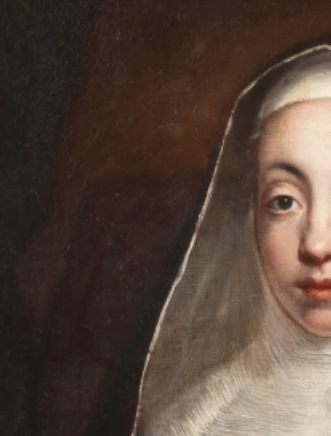
Arcangela Tarabotti (1604–1652) was a Venetian Benedictine nun and writer — widely regarded as the most radical feminist voice of seventeenth-century Italy. Sent as a girl to the convent of Sant'Anna in Castello and professed against her will, she spent her whole adult life in enclosure. Denied the education, marriage, and liberty granted to others, she made writing her one act of freedom, publishing a series of works that attacked monacazione forzata — the forced monachization of women — and the men, institutions, and economics that sustained it.
She wrote under her own name and under pseudonyms, sparred with famous male academicians, cultivated a network of patrons and printers from inside the cloister, and saw one of her books placed on the Church's Index of Forbidden Books. This site gathers her life, her books, and the world she fought — drawn entirely from the scholarship of her modern editors and translators.
Quick facts
- Born
- February 1604, Venice (baptized Elena Cassandra)
- Died
- 1652, aged 48, at Sant'Anna in Castello
- Religious name
- Arcangela (took the habit 1620)
- Order
- Benedictine, Convent of Sant'Anna in Castello
- Known for
- Protesting forced monachization; defending women
- Pen names
- Galerana Baratotti; Galerana Barcitotti; "D.A.T."
- Most famous work
- Paternal Tyranny (La semplicità ingannata)
Why she matters
Tarabotti fused personal grievance with political analysis. With, as her editors put it, "a clear-sightedness worthy of Machiavelli," she exposed how rising dowries, primogeniture, and reasons of state combined to lock unwilling women in convents.
She is now read as a foundational figure in the history of feminism, the literature of protest, and women's writing in early modern Europe.
Start exploring
Biography
From a chemist's daughter with a congenital limp to the fiercest pen in Venice.
Her Works
Seven texts, four published in her lifetime — polemics, satire, letters, devotion.
Timeline
The key dates of her life, her publications, and their afterlives.
Convent Life
Enclosure, dowries, rituals, and the world of Sant'Anna in Castello.
Her Ideas
Forced monachization, free will, and the defense of women.
Curiosities
Surprising, human details — from a hidden manuscript to a painter sister.
In her own words
"Mine is not a prison, it is a Hell into which no hope of leaving can enter." — Lettere familiari, letter 163